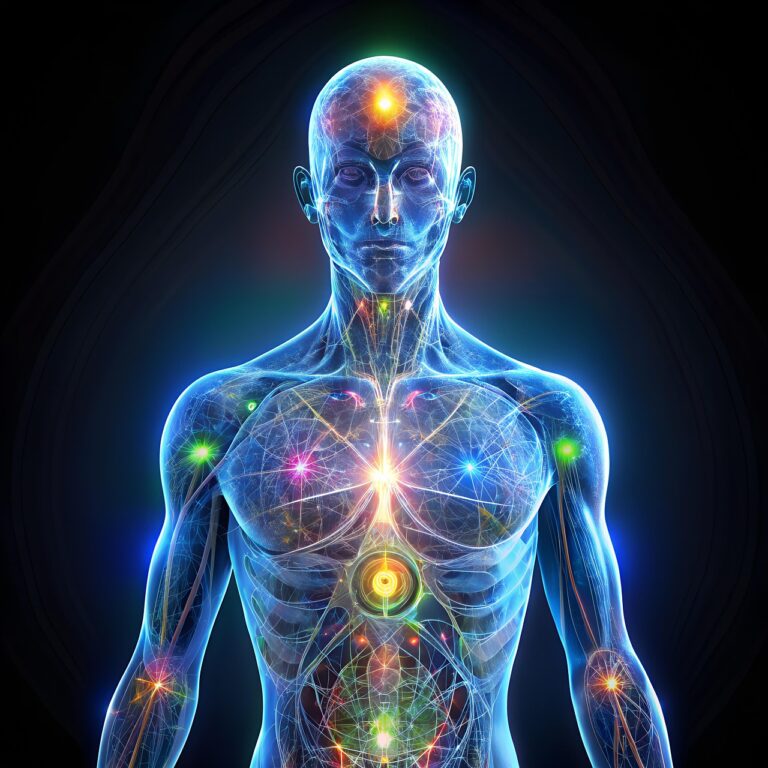
I am because you are, carries the deep truth: we are all connected, and nothing exists in isolation.
This blog only comes alive because you are reading it. Without you, these words would have no place to land.
I cannot be of service if there is no one to serve.
I am because you are, is the essence of the African philosophy of Ubuntu. It teaches that we are all inherently connected and deeply dependent on one another. We become who we are through relationship – with each other, with the Earth, with our ancestors, with the cosmos, and with the unseen world of spirit.
This understanding is shared by many indigenous cultures across the world.
When I say, I am because you are, I affirm, that identity, growth, and healing arise from connection, not from isolation.
Ubuntu in Action – Truth and Reconciliation
The first time I encountered Ubuntu consciously was in the mid-1990s, when it found its powerful expression through the Truth and Reconciliation Commission in South Africa.
After the long and painful years of apartheid, Archbishop Desmond Tutu guided the country not through revenge, but through truth-telling and forgiveness.
There were strong emotions, tears, anger, and unimaginable pain. And yet, people stood before one another and said: “I see you. I hear you. Your suffering matters.”
Ubuntu teaches forgiveness – but it also teaches not forgetting.
It says: I forgive, and I remember. I remember our shared humanity, even in the face of deep brokenness.
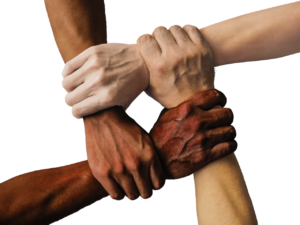
Ubuntu as a Traditional Practice
About 25 years ago, while studying systemic mediation, I encountered Ubuntu again – this time through a story shared by Marshall Rosenberg, the founder of Nonviolent Communication, who was one of my teachers.
He described the restorative practice of the Bemba tribe in Zambia.
When someone commits a wrongdoing, the entire village stops working. Every man, woman, and child gathers in a large circle around the person who caused harm.
The accused stands in the center – alone, unfettered, unpunished.
Then, one by one, the villagers speak aloud every good thing this person has ever done: their strengths, their kindness, their contributions. No one mentions the wrongdoing. No one criticizes.
This continues for days, until all the good has been spoken.
The Bemba believe that misbehavior is a temporary forgetting of one’s true nature – a cry for help. The ceremony reminds the person of who they truly are, a valued member of the community.
When it ends, there is celebration. The circle opens and the person is welcomed home.
Ubuntu means:
restoration over punishment,
belonging over shame,
reintegration over exile.
To this day, Zambia continues to actively apply these principles to heal divisions and conflicts.*
My Experience of Ubuntu in Japan
In fall 2024, I experienced Ubuntu in a very practical and personal way during a peace delegation in Japan.
Our group of more than 50 people from all over the world had to board and exit two bullet trains to Hiroshima – with only two minutes to get ourselves, all our suitcases, and even musical instruments on and off.

It could easily have become chaos.
But one participant, who represents Ubuntu worldwide, suggested something simple and profound: that we focus not on our own luggage, but on all the luggage as one shared task.
We lined up the large suitcases first, then the instruments, then smaller bags, and finally the people. Strong members coordinated the hand-off.
Together, we accomplished what no individual could have done alone, and it became a defining moment, a lived experience: we are better together.
Why Ubuntu Matters Today
Worldwide we see divisions across cultures, beliefs, and nations.
Many people feel deeply disconnected – from one another, from nature, and even from themselves. Loneliness is widespread and even recognized as epidemic.
Though technology connects us instantly, it is a superficial interaction that creates an illusion of intimacy and contributes to isolation. And beneath it all lives a shared longing: to be seen, to be heard, and to belong.
What, if we all would live as if the world were one body: where the joy of one uplifts all, and the pain of one calls all to heal.
How about you? When was the last time you felt a deep connection – one that made you feel a togetherness, an experience of ‘together, we are better?’
I am because you are.
I am because we are.
Together, we are exponentially more, and capable of becoming the best version of ourselves.
Thank you for reading my blog.
With love, Lisa
Note:
*In a way, Norway’s rehabilitative prison system reflects Ubuntu in practice: by prioritizing dignity and reintegration over punishment, around 80% of former inmates successfully return to society without reoffending.