
Lately, I have been reflecting on a simple question:
What is present?
Not what should be present. Not what I wish were present. Not what I am thinking about.
But what is actually here, in this moment?
What do I see? What do I hear? What do I feel?
Without immediately naming it, analyzing it or commenting on it.
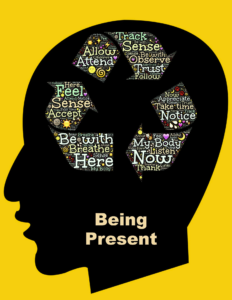
Just being present.
As I prepared a recent speech, I found myself moving through an unexpected journey. The talk began with a completely different title: The Soul Cannot Be Outsourced. I wanted to explore the increasing role of artificial intelligence in our lives and ask what remains uniquely human.
Yet something wasn’t quite right.
The more I reflected on it, the less connected I felt to the speech. The ideas were interesting, but they did not fully come alive for me. So I kept asking myself:
Why do I want to speak about this?
Slowly another question emerged:
What have I learned from forty years of sitting with people in healing, grief, conflict, and transformation?
The answer surprised me by its simplicity.
Presence heals.
Again and again, I discovered that what people needed most was rarely information, advice, or solutions.
They needed presence.
They needed someone willing to sit beside them. Someone willing to listen. Someone willing to be with them in their pain, confusion, uncertainty, or grief.
Over time, the title of the speech changed. It became:
Our first language is presence.
The phrase arrived almost on its own, and the moment I heard it, something inside me relaxed.
Before we learned concepts, before we developed opinions, before we accumulated knowledge, we knew the world through direct experience.
Through touch.
Through warmth.
Through connection.
Before we learned to think about life, we were already living it.
Our first language was presence.
Yet somewhere along the way, many of us learned to live primarily in our minds. Thinking became more valued than feeling. Doing became more important than being. Productivity often overshadowed presence.
Our thinking mind is a wonderful tool. Just as the eyes are seeing and the ears are hearing, the mind thinks. It allows us to create, analyze, plan, and innovate. The challenge begins when the mind becomes our master instead of our servant.
For me, presence is not the absence of thought.
It is the ability to be fully here.
To notice.
To listen.
To feel.
To meet life as it is.
A few years ago, my sister lost her beloved husband unexpectedly. In the midst of her grief, I realized once again that what heals us most deeply is rarely advice. She did not need to be fixed. She needed someone to sit beside her.
Presence heals.
Not because it removes pain, but because it allows us to feel deeply met within it.
Presence – a quality that technology cannot replace
Today we are entering an age of astonishing technological development. Artificial intelligence can answer questions, generate ideas, and perform tasks that once seemed impossible.
Yet there are qualities that no technology can replace.
The ability to feel.
The ability to love.
The ability to laugh together until tears come to our eyes.
The ability to be fully present with another human being.
Perhaps our greatest challenge is not keeping up with technology. Perhaps it is remembering what connects us.
So I leave you with the same question that has been accompanying me:
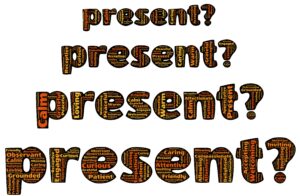
What is present?
I still ask myself this question almost every day. Sometimes the answer is joy. Sometimes uncertainty. Sometimes gratitude. Whatever is present becomes the doorway.
And perhaps, beneath all the noise, all the striving, and all the thinking, we may rediscover what has been there all along:
Our first language is presence.